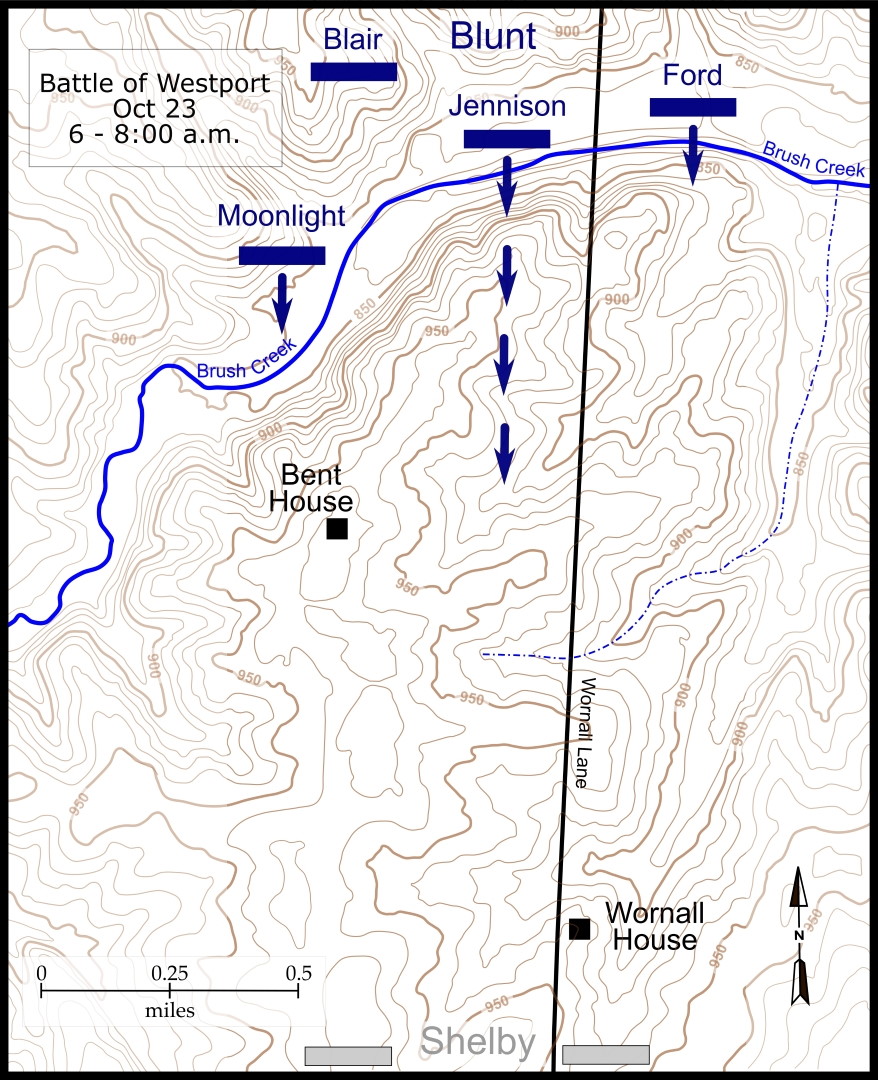
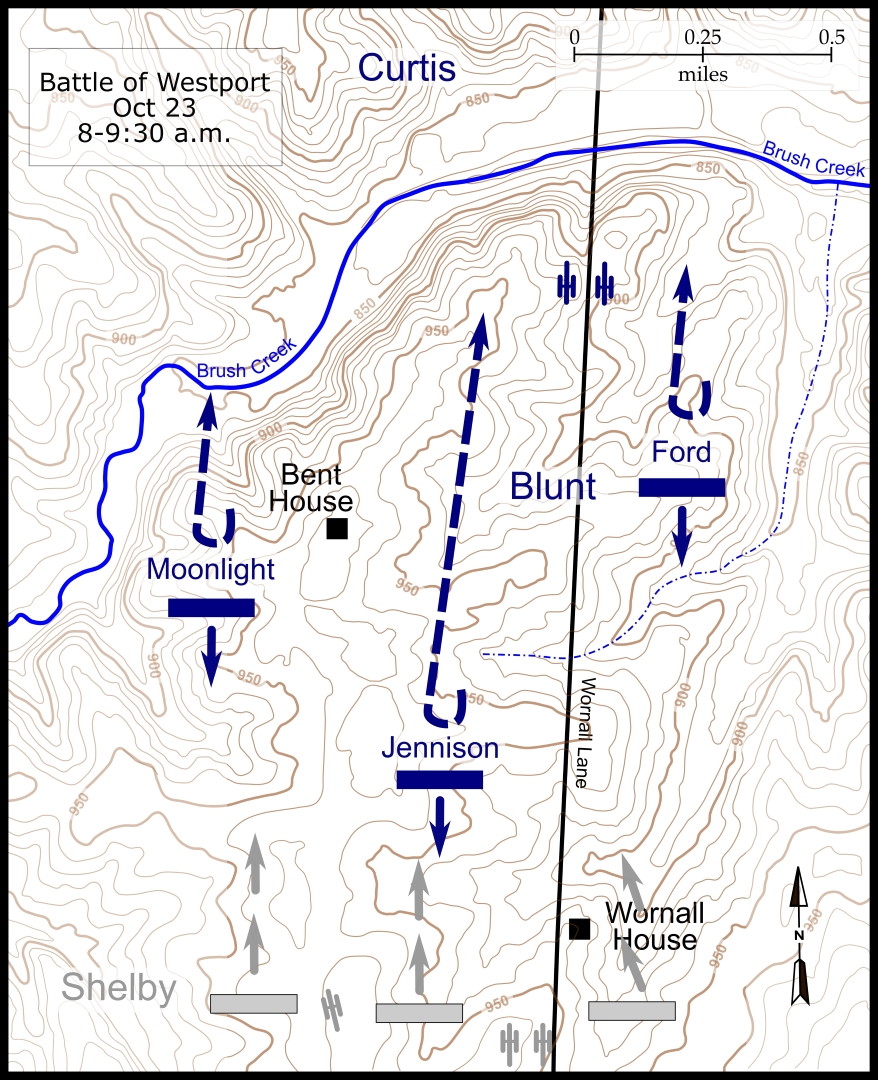
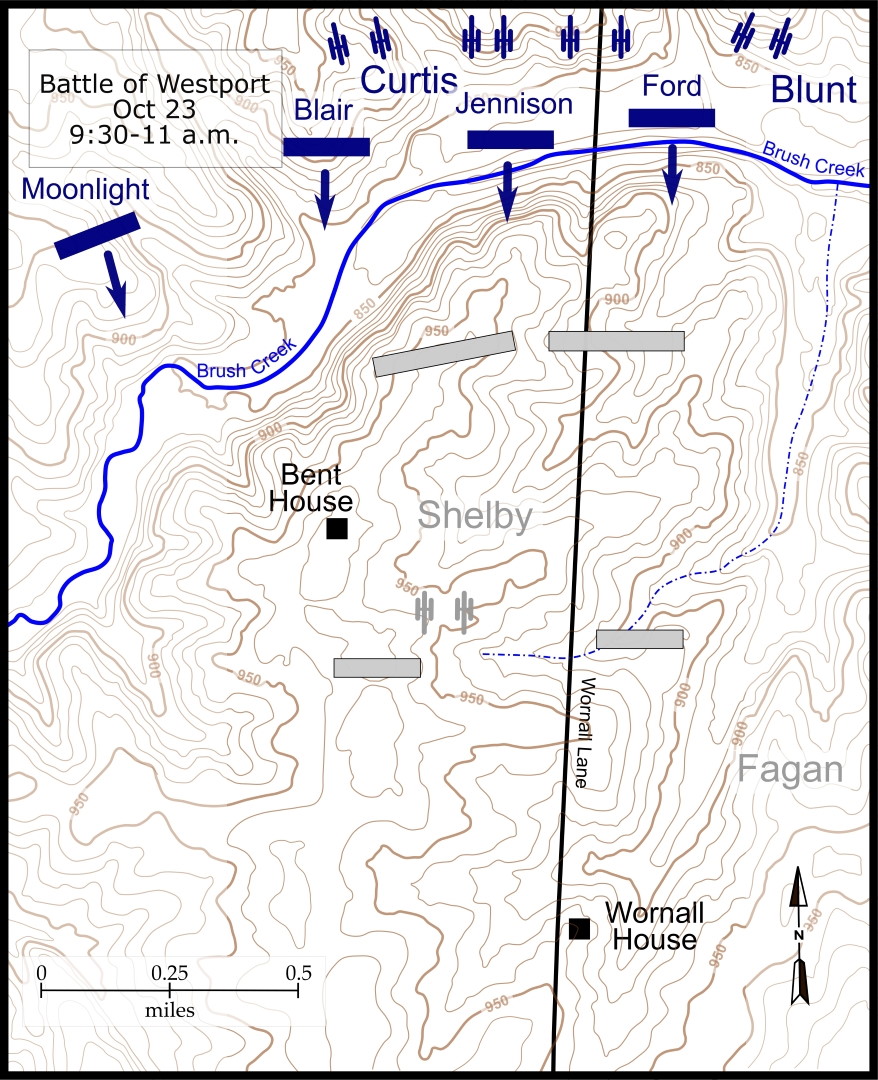
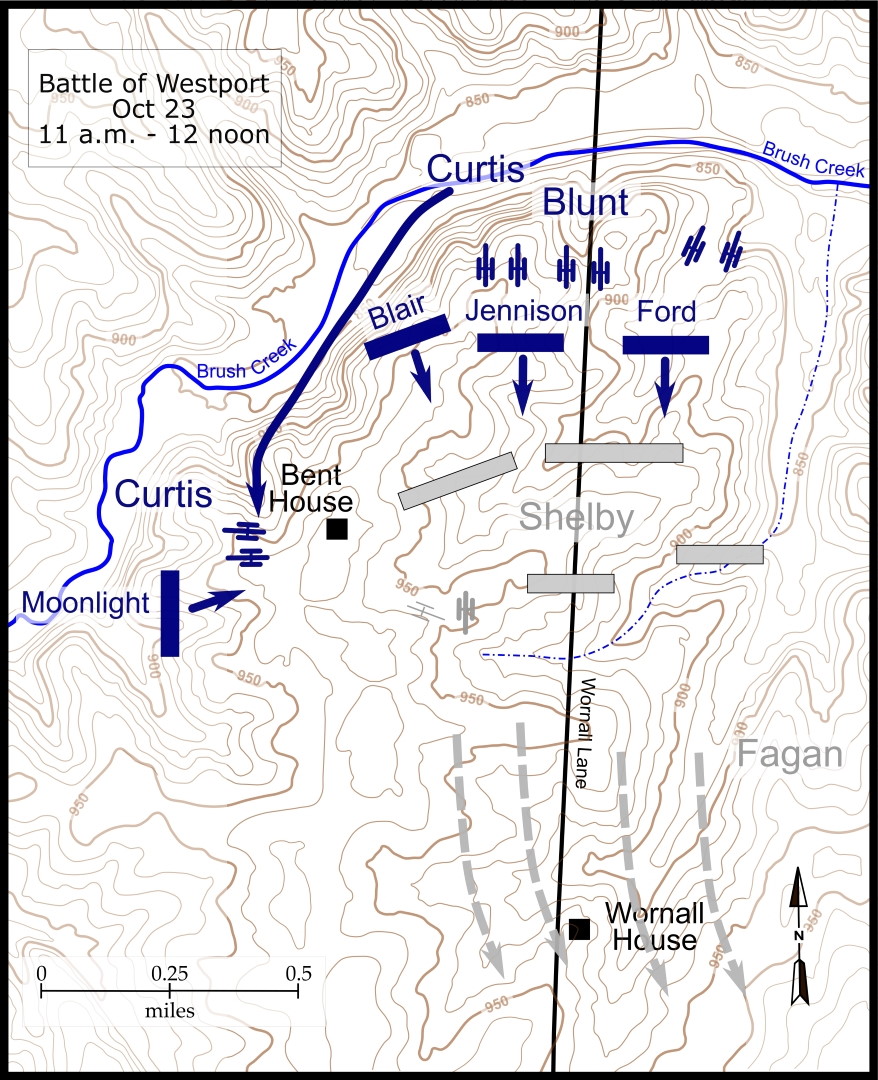
Scroll down for battlefield maps showing troop positions.
Scroll down for the text to follow along with the audio.
Click on the image to read a biographical sketch.
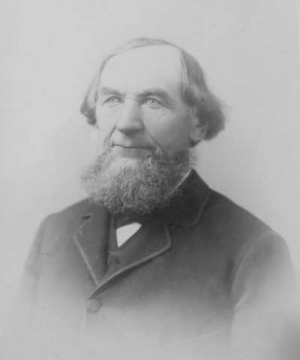
George Thoman, Civilian Farmer
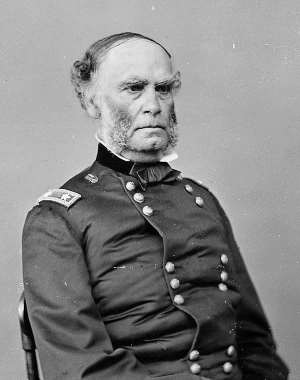
Maj. Gen. Samuel R. Curtis, Army of the Border
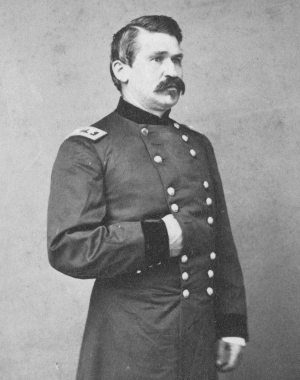
Maj. Gen. James G. Blunt, Provisional Cavalry Division, Army of the Border
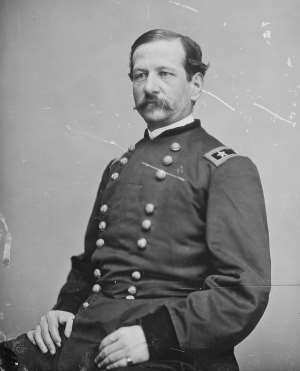
Maj. Gen. Alfred Pleasonton, Provisional Cavalry Division, Department of the Missouri
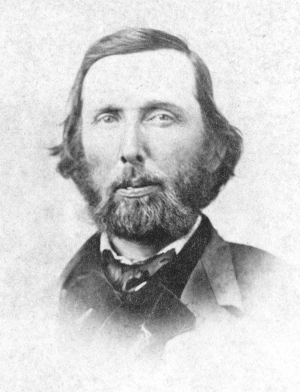
Col. James H. Ford, 4th Brigade, Blunt's Division
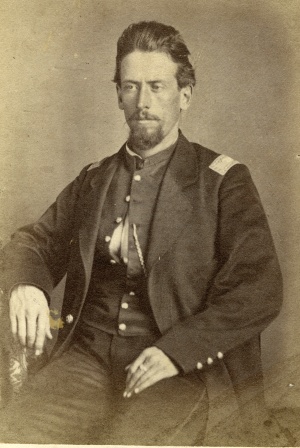
Col. Charles R. Jennison, 1st Brigade, Blunt's Division
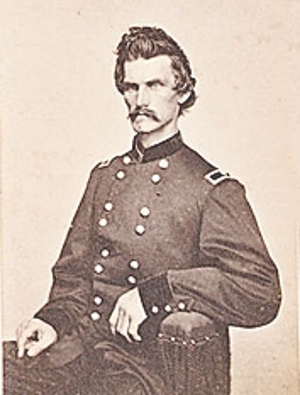
Col. Charles W. Blair, 3d Brigade, Blunt's Division
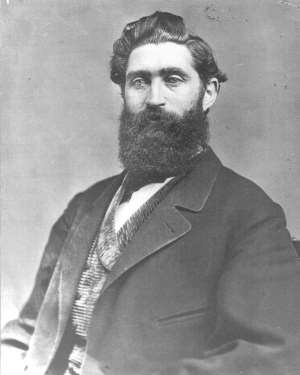
Col. Thomas Moonlight, 2d Brigade, Blunt's Division
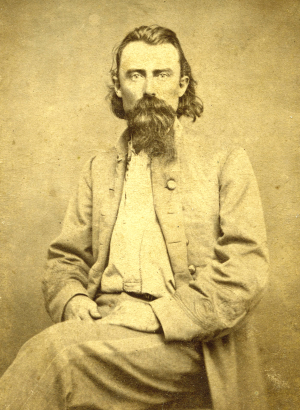
Brig. Gen. Jo Shelby, Shelby's Division
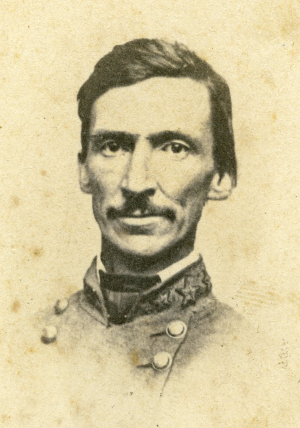
Brig. Gen. M. Jeff Thompson, Iron Brigade, Shelby's Division
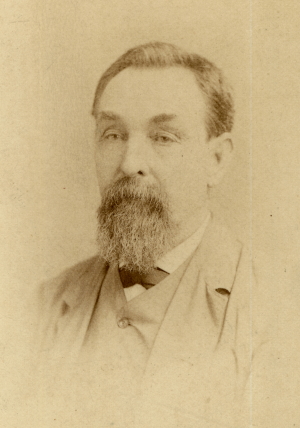
Col. Sydney D. Jackman, Jackman's Brigade, Shelby's Division
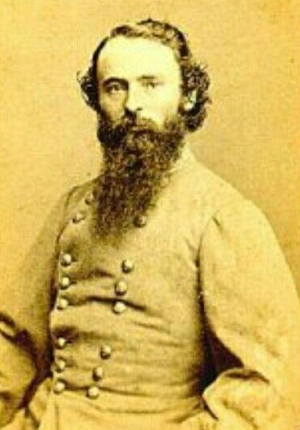
Maj. Gen. James F. Fagan, Fagan's Division
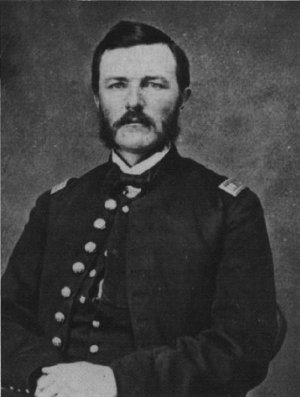
Capt. William D. McLain, Independent Battery, Colorado Light Artillery
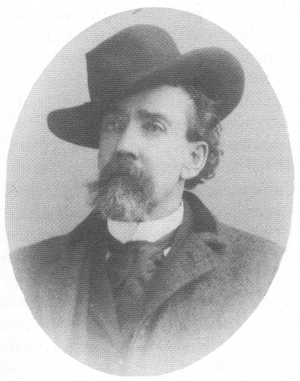
Capt. Richard A. Collins, 2d Missouri Light Artillery (CSA)
Earlier today with the help of local farmer George Thoman, Maj. Gen. Samuel R. Curtis led one of his artillery batteries around the enemy’s position and opened fire on their left flank, sowing confusion in their ranks. In less than an hour, the result was a general retreat.
Late last night in his headquarters at the Gillis House Hotel, General Curtis discussed his next moves with his lieutenants and staff. After yesterdays defeat along the Big Blue River, Curtis favored falling back within the defenses of Kansas City. But Maj. Gen. James G. Blunt was resupplying his men in Westport and argued that they should attack in the morning. Then the commander received a dispatch. Maj. Gen. Alfred Pleasonton was in Independence. That settled it. Curtis told Blunt to return to his men and attack first thing in the morning.
Dawn broke cold this morning with ice edging the sides of Brush Creek. The creek’s valley was cloaked in fog as the dismounted Federal cavalry waded through the creek to the south side. Col. James H. Ford’s brigade was the Federal left flank, east of Wornall Lane. To their right was Col. Charles R. Jennison’s brigade. Next came Col. Charles W. Blair’s brigade. Deployed along the state line was the brigade of Col. Thomas Moonlight. As they walked up the steep incline, they were not able to see very far ahead, and it was eerily quiet. But they all knew the enemy was somewhere south of them.
Meanwhile, Brig. Gen. Jo Shelby was getting his forces organized and moving north toward Westport. Brig. Gen. M. Jeff Thompson’s brigade was on the Confederate right with Col. Sydney D. Jackman’s brigade to their left. Maj. Gen. James F. Fagan’s division was on the Confederate right flank playing a supporting role.
The Confederates collided with the Federals south of Bent’s Farm in the area near the Wornall House early this morning. The fighting was intense, and the Confederates slowly pushed the Federals back. The Federals withdrew down through the woods down the hill and crossed back to the north side of Brush Creek. The Confederates had to stop and regroup on the high ground above Brush Creek because they ran low on ammunition. General Thompson later told us …
The men were now thoroughly exasperated, and had we not had to wait for more ammunition, I believe that I could have taken Westport with that portion of the Brigade then with me. An hour or more was lost in obtaining ammunition.
General Curtis brought reinforcements down from Kansas City and used the lull in the action to confer with General Blunt. They planned to renew the attack and Curtis decided to lead the attack, himself. But then something happened, and Curtis changed his mind. A local farmer entered the Federal lines and demanded to speak with Federal commander. About to turn 45 years old, George Thoman explained to General Curtis there was a little-known road, more of a path really, following a ravine formed by Swan Creek. This path went from north to south and reached to present-day 55th Street. Curtis believed Thoman’s information. He decided to take his escort along with Capt. James H. Dodge’s 9th Wisconsin Battery and follow George Thoman. They headed west until they came to the ravine which ran to the south. Unseen by the Confederates fighting up on top of the plateau, Thoman led Curtis around to the left flank of Shelby’s lines. There Curtis ordered the artillery to unlimber and open fire on the Confederates.
While General Curtis was following George Thoman around the Confederate left, General Blunt led the Federals forward up the hill again. He succeeded in pushing the Confederates back and deployed his artillery at the top of the hill. Deployed on both sides of Wornall Lane, Capt. William D. McLain’s Independent Battery, Colorado Light Artillery was particularly effective against the enemy. During the duel with the Confederate artillery, one of Capt. Richard A. Collins’s 10-pounder Parrotts burst.
When General Curtis directed artillery fire against the Confederate left flank, Colonel Jackman adjusted his lines to take on this new threat. But then General Shelby received word from Maj. Gen. Sterling Price that the wagon train was being threatened. And then General Fagan sent word he was being attacked from the east and needed help.
The situation was getting desperate for General Shelby. He pulled Jackman’s brigade out of line to deal with the threat on his right flank. General Thompson’s Iron Brigade was going to have to handle the Federals to their front and left.
But it was too much, and the Confederates began withdrawing south. The Federals tried to overtake the fleeing Confederates, but Colonel Jackman deployed his brigade behind a stone wall and successfully held off the Federals while the rest of Price’s army caught up to the wagon train. The Federals fell back to regroup, and Jackman withdrew south. The battle was over.
Monnett, Howard N. Action Before Westport, 1864. Boulder, CO: University Press of Colorado, 1995.
Sinisi, Kyle S. The Last Hurrah: Sterling Price’s Missouri Expedition of 1864. Lanham, MD: Rowman & Littlefield, 2016.
Titterington, Dick. The Battle of Westport, October 21–23, 1864: A Driving Tour of Battle Sites in Kansas City, Independence, and Northeastern Jackson County, Missouri. Overland Park, KS: Trans-Mississippi Musings Press, 2019.