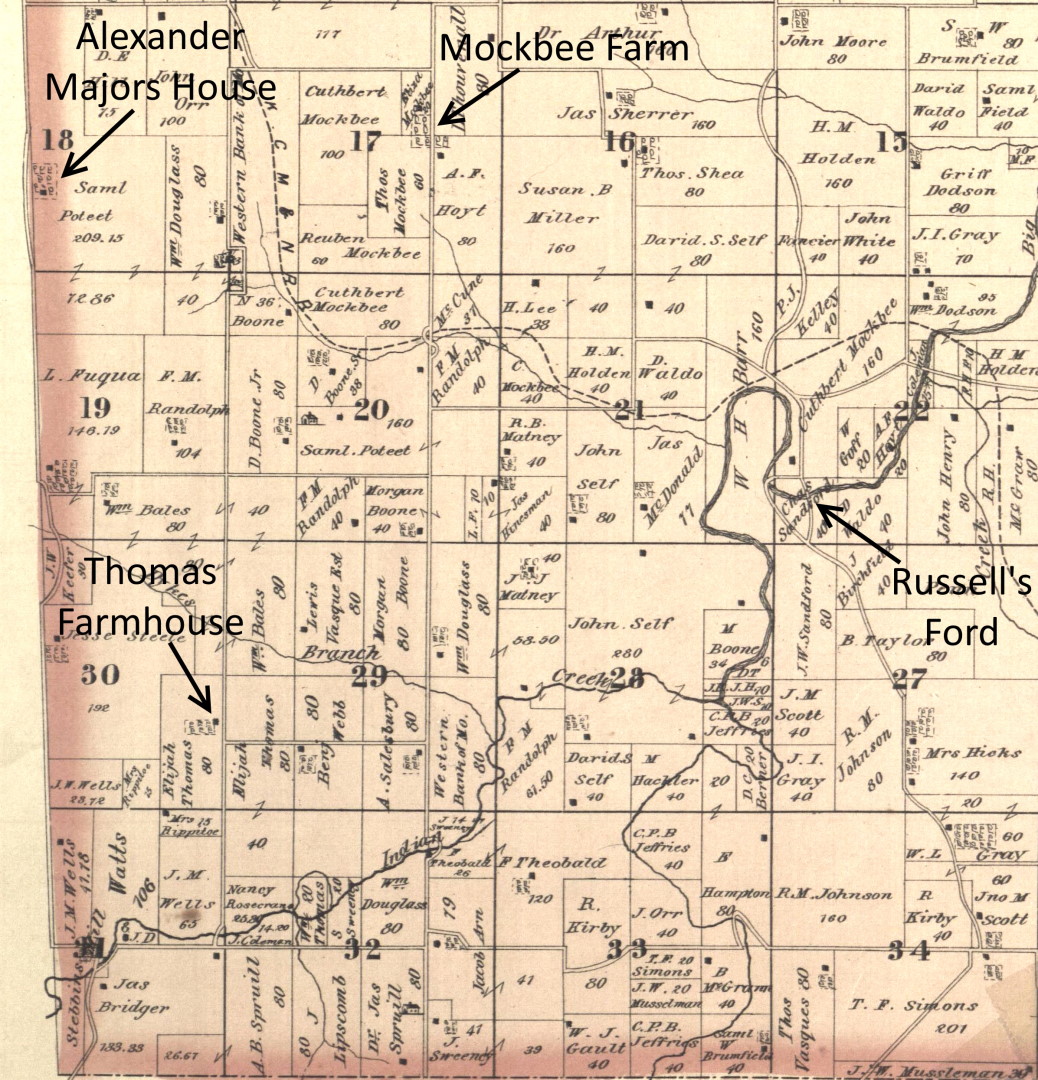
Scroll down for map showing location of the farmhouse.
Scroll down for the text to follow along with the audio.
Click on the image to read a biographical sketch.
Annotated 1877 Jackson County Plat Map, Township 48, Range 33
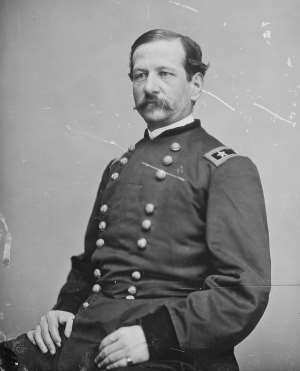
Maj. Gen. Alfred Pleasonton, Provisional Cavalry Division, Department of the Missouri
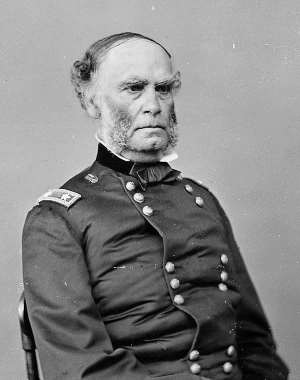
Maj. Gen. Samuel R. Curtis, Army of the Border
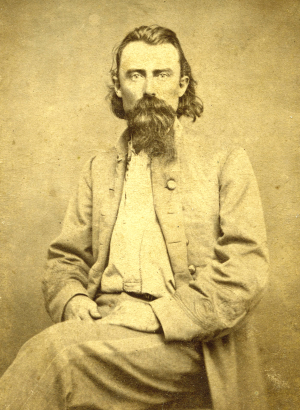
Brig. Gen. Jo Shelby, Shelby's Division
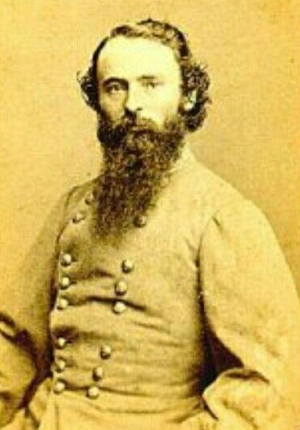
Maj. Gen. James F. Fagan, Fagan's Division
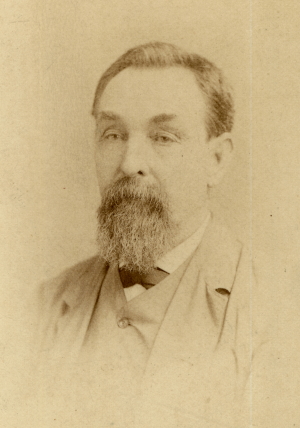
Col. Sydney D. Jackman, Jackman's Brigade, Shelby's Division
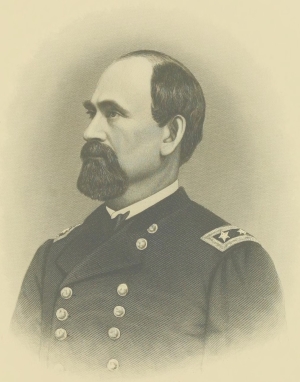
Brig. Gen. John B. Sanborn, 3d Brigade, Pleasonton's Cavalry Division
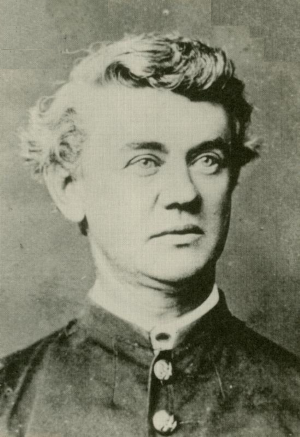
Lt. Col. Frederick W. Benteen, 10th Missouri Cavalry
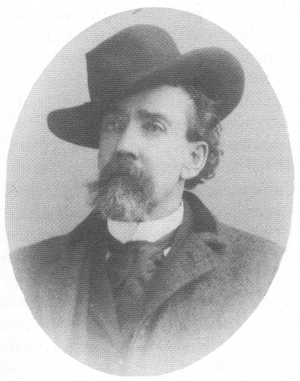
Capt. Richard A. Collins, 2d Missouri Light Artillery (CSA)
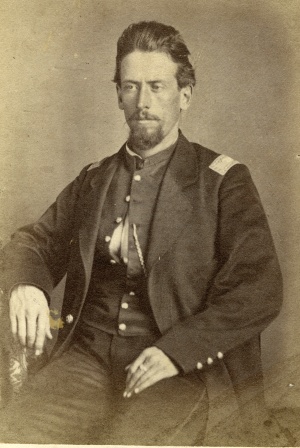
Col. Charles R. Jennison, 1st Brigade, Blunt's Division
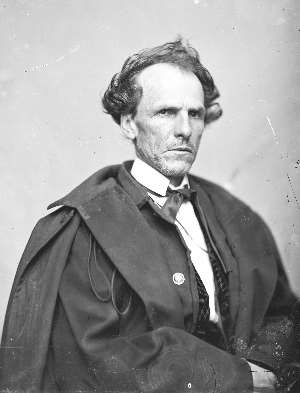
Kansas Senator James H. Lane
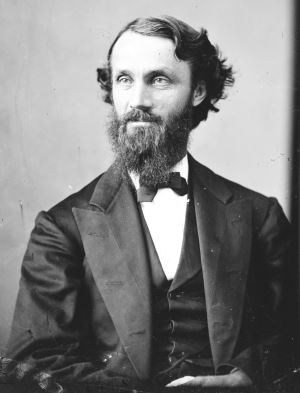
Kansas Senator Samuel C. Pomeroy
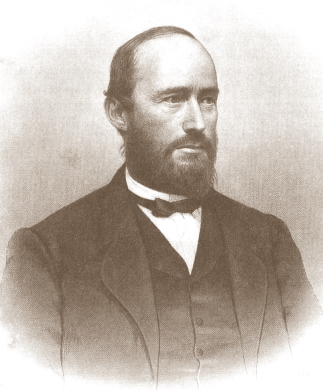
Kansas Governor Thomas Carney
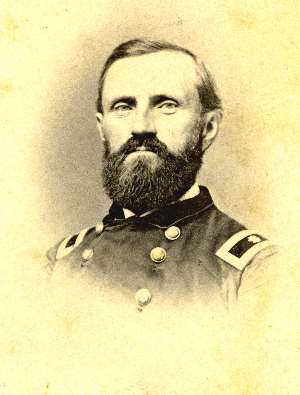
Maj. Gen. George W. Deitzler, Kansas State Militia
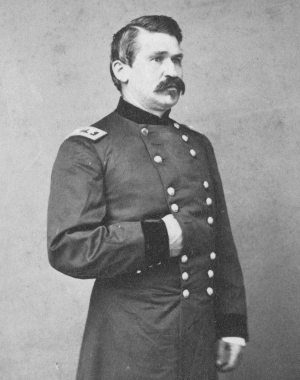
Maj. Gen. James G. Blunt, Provisional Cavalry Division, Army of the Border
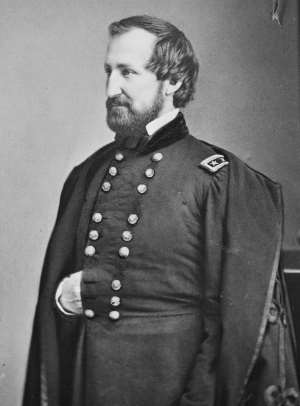
Maj. Gen. William S. Rosecrans, Department of the Missouri
Earlier today shortly after 12 noon, Confederate forces south of Westport and at Byram’s Ford began retreating from the battlefield. By 2:00 pm, the victorious Union commanders were meeting to plan their next moves.
Around the same time Maj. Gen. Alfred Pleasonton was breaking the Confederate defense line over at Byram’s Ford, Maj. Gen. Samuel R. Curtis hit Brig. Gen. Jo Shelby’s left flank with artillery fire south of Westport. General Pleasonton moved quickly and directed his artillery to open fire on Maj. Gen. James F. Fagan’s right flank.
With Marmaduke retreating and Fagan under attack, Shelby ordered Col. Sydney D. Jackman to disengage his brigade and reinforce Fagan. He did so and ran straight into the brigade of Brig. Gen. John B. Sanborn. So far this day, Sanborn’s men had been little engaged in the fighting and were ready to take it out on the Confederates. But before Sanborn could order his men forward, Fagan, supported by Jackman, charged Sanborn’s position. Sanborn’s men fell back in great confusion. Then Lt. Col. Frederick W. Benteen arrived with Winslow’s Brigade and reinforced Sanborn.
At the sign of Federal reinforcements, Fagan ordered a withdrawal and ordered Jackman to fight a rearguard action. Fortunately for Jackman there was a long stone wall nearby, and he quickly deployed his men behind the wall. Supported by Capt. Richard A. Collins and his one remaining 10-pounder Parrott gun, Jackman used this strong defensive position to hold off the Federal attacks. By 2:00 p.m., the Federal attack slackened, and Jackman withdrew south toward the wagon train.
Now the two separate Union forces were united and in pursuit of the Confederates in full retreat. As the last of the Confederates retreated south, chased by Col. Charles R. Jennison’s Brigade, Generals Curtis and Pleasonton finally met face to face. It was around 2:30 p.m. when they convened at the home of Elijah Thomas “for dinner and consultation.”
The Union commanders needed to decide how they would cooperate in the pursuit of the retreating Confederate army. Curtis and Pleasonton were there with their staffs, along with Kansas Senators James H. Lane and Samuel C. Pomeroy, Kansas Governor Thomas Carney, Maj. Gen. George W. Deitzler, Maj. Gen. James G. Blunt, and Brig. Gen. John B. Sanborn. Maj. Gen. William S. Rosecrans, commander of the Department of the Missouri, was still in Independence and did not attend.
All the Kansas politicians argued for Curtis to release the Kansas State Militia from service so they could return to their day jobs, but also vote in the upcoming November 8 election. General Pleasonton argued against this—he wanted to send his men back to their home bases. Curtis was a bit taken aback. Pleasonton’s cavalry were all more experienced fighters than the Kansas militiamen and in Blunt’s Division he had less than 4,000 veterans.
As it turns out, with Rosecrans support, Curtis will have Pleasonton’s command as part of the pursuit force. Curtis, as the senior officer present, will command the pursuit. Those Kansas State Militia living north of the Kansas River are to be released. The rest will be released as the pursuing army got nearer to their homes.
At 3:00 p.m. from the Thomas Farmhouse, Pleasonton wrote to his boss, Rosecrans, who was still in Independence.
I have just reached this point after a day’s hard fighting, and struck the enemy in the flank, and I inflicted all the damage I could, and I finally connected with General Blunt, and we then started the enemy on the run, chasing him about six miles across the prairie on the gallop. We have some prisoners, and have killed many of the enemy. He is pushing on rapidly, and I am following, as is General Blunt also. General Curtis is also here.
Later that afternoon, General Curtis sent a telegram to US Army Chief of Staff, Maj. Gen. Henry W. Halleck.
The enemy is in full retreat and much demoralized. He moves directly south on and near the Line road. General Pleasonton united his forces with mine at 2 o’clock. Our losses are inconsiderable. We lost one gun yesterday and took one today. The pursuit will be renewed at daylight. After four days’ obstinate fighting the men and horses are much exhausted and must have a little rest.
For the time being, the Union army was going to get some needed rest. They planned to restart the pursuit tomorrow. The Battle of Westport was over, but Price’s 1864 invasion of Missouri still had a bit left to go before it was all over.
Monnett, Howard N. Action Before Westport, 1864. Boulder, CO: University Press of Colorado, 1995.
Sinisi, Kyle S. The Last Hurrah: Sterling Price’s Missouri Expedition of 1864. Lanham, MD: Rowman & Littlefield, 2016.
Titterington, Dick. The Battle of Westport, October 21–23, 1864: A Driving Tour of Battle Sites in Kansas City, Independence, and Northeastern Jackson County, Missouri. Overland Park, KS: Trans-Mississippi Musings Press, 2019.